

If it's ugly, it is British; if it's weird, it is French; and if it's ugly and weird, it is Russian.
Here are a few of those designs to prove my point. Just remember, I said a few of them actually got airborne.
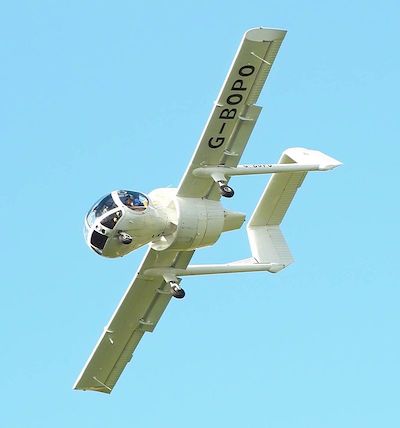
One of them that flew, and very well, was the Edgley EA7 Optica.
The Optica made its first appearance, and at the 1981 Paris air show, the announcement of a first production order was made—25 for an Australian distributor. I have not heard of any other takers. Give them a call if you are interested.
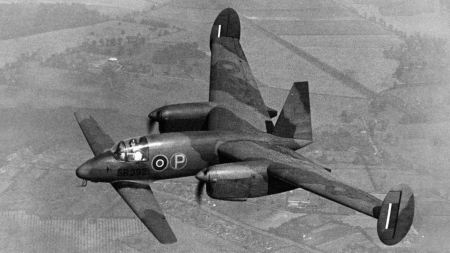
Britain’s Miles M.39 Libellula
Britain's Miles M.39 Libellula, was a swept-wing, twin-engine, medium bomber demonstrator that flew in 1943. The three-man attack aircraft was designed to deliver a 2,000 lb. payload more than 1,500 miles (2,400 km) at 400 mph. Never was put into active service.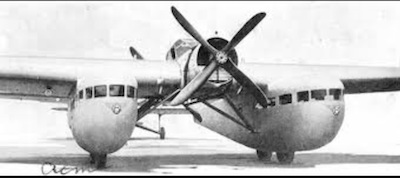
French Bleriot 125
This plane was designed as an airliner, and this very unconventional aircraft was first revealed at the 1930 Paris Salon de l’Aé
ronautique.When flown the following year, it displayed very poor flight characteristics. Although attempts to improve it continued into 1933, certification could not be achieved, and the sole prototype was scrapped the following year.
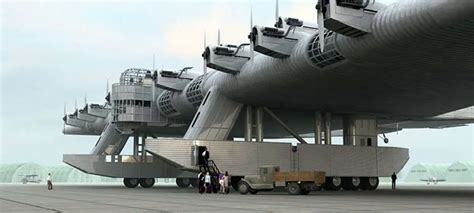
The K-7
This plane was designed by World War I aviator and Soviet aircraft designer Konstantin Kalinin at the aviation design bureau he headed in Kharkiv, Ukraine.
It was one of the biggest aircraft built before the jet age. It featured an unusual arrangement of six tractor engines on the wing leading edge and a single engine in pusher configuration at the rear. It did fly, though, but just long enough to crash.
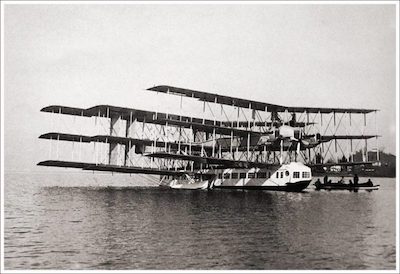
The Flying Boat” - Caproni Ca. 60
A 9-winged, 74-foot long, 31-foot tall prototype with a 100-foot-long wingspan, weighing well over 30,000 pounds, with 4 propellers powered by 8 piston engines, each with 400-horse-power! It was meant to be a luxury vessel capable of carrying 100 passengers.The ‘Flying Boat’ fell apart on it’s second test flight, shortly after taking off, crashing into the water, and damaging the failed experiment beyond repair.
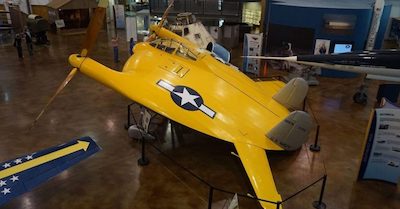
Vought V-173
Yes, Americans entered the competition for weird with this little model.This bright yellow experimental craft was developed during WWII. Charles H. Zimmerman designed it as an “all-wing” aircraft. It continued to be flight tested until 1947, when the US Navy realized it served little to no practical use.